
For Lindsay Astor, being proactive about her health has never been simple.
A former college behavioral science professor turned mental health advocate, the 40-year-old Westchester resident has spent years quietly managing significant health anxiety of her own. “I’ve always known how important screening is,” she says. “But knowing that, and actually going through with it, are two very different things.”

Colorectal cancer has long been on Lindsay’s radar. In 2010, her father was diagnosed with stage 0 colon cancer after a routine screening detected a malignant growth early. Because it was caught in time, he required surgery but no chemotherapy. “Early detection saved his life,” Lindsay says.
In addition to her father’s diagnosis, Lindsay had experienced other losses to cancer in her family, which compounded her fears. “Ignorance can feel like bliss,” she admits. “Sometimes not knowing feels safer than facing the worst-case scenario.”
But over the past year, Lindsay began experiencing persistent digestive symptoms. While some people might brush off these changes, Lindsay knew her family history placed her at higher risk. Colorectal cancer screening guidelines now recommend beginning routine colonoscopies at age 45 for average-risk adults, but those with a family history often need to start earlier.
Still, making the appointment wasn’t easy for her.
“It took me almost a year to work up the nerve,” she says. “I was terrified.” With encouragement from her therapist and support from loved ones, Lindsay scheduled a visit with her father’s gastroenterologist, Dr. Jack Rosemarin, of White Plains Hospital Physician Associates.
From the start, Dr. Rosemarin took both her symptoms and her anxiety seriously. “He helped ease my mind without dismissing my fears,” Lindsay explained. After reviewing her history and evaluating her symptoms, he recommended a colonoscopy.
The procedure itself turned out to be far less daunting than Lindsay had imagined. “The anticipation was the hardest part,” she says. “Everyone was calm and kind, and I felt very cared for.”
When she woke up, she learned that a small polyp had been found and removed. While it was not believed to be the cause of her symptoms, its discovery was significant. Polyps can develop into cancer over time if left undetected. Because it was found early, Lindsay will now repeat screening at shorter intervals – every five years – to ensure continued monitoring.
“I keep thinking – if I had waited until 45, what might have happened?” she says. “That polyp could have continued to grow. Screening gives you options. It gives you power.”
“Lindsay’s story is one I see all too often,” adds Dr. Rosemarin. “For many years, it was understandable that people avoided screening. When our ability to treat cancer was limited, not wanting to know felt easier. But with modern colonoscopy, we can often remove small polyps before they ever become cancer, or detect cancer at a very early, highly curable stage.”
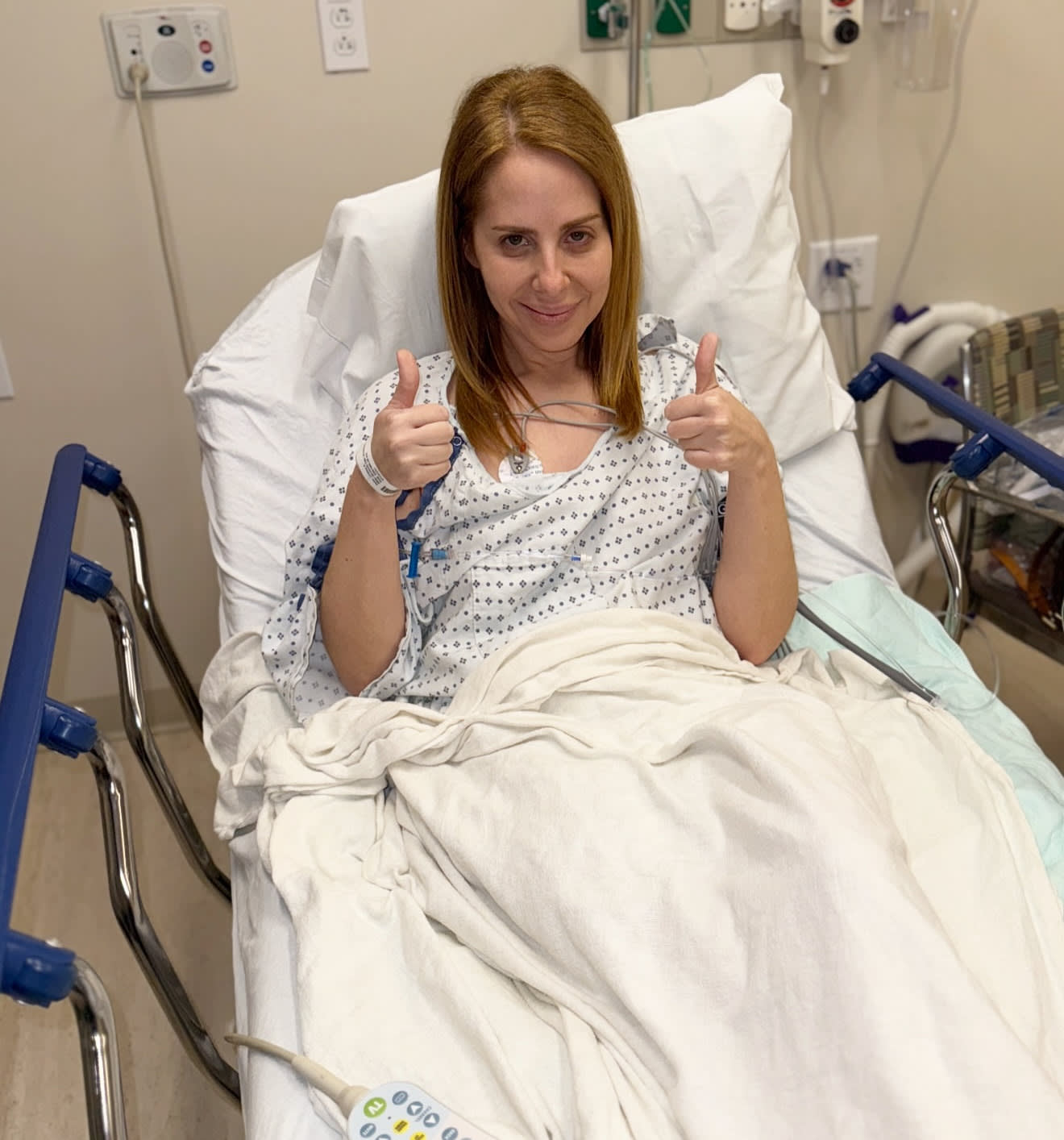
Just as important as the physical outcome was the emotional shift that followed. “I have peace of mind now,” Lindsay shares. “And as someone with severe health anxiety, that’s huge.” She says that facing this fear has made future medical appointments feel more manageable. “If I can do this, I can do other follow-ups too.”
Today, Lindsay encourages others to prioritize preventive care and is committed to raising awareness of the importance of screening.
Take the risk assessment to find out if you should be screened for colorectal cancer or visit wphpa.org or call 914-849-MyMD to find a physician.